:quality(75))
Every year, when the cold season slowly settles over the Mostviertel, a typically festive Christmas speciality is traditionally made in kitchens across the region: Kletzenbrot. This spiced, fruity bread is baked in countless variations depending on family tradition, and is a firm fixture in the weeks leading up to Christmas.
The sheer variety of recipes makes tasting it at friends' and family gatherings over the Christmas holidays a wonderfully diverse culinary pleasure. Every family has their own recipe. There are versions with or without nuts, with different dried fruits such as apples, plums, figs or raisins. Sometimes candied fruits are added to the mix as well. The speciality is rounded off with various spices, such as cinnamon or cloves. But there is one ingredient that all recipes share – the one that gives Kletzenbrot its very name: the Kletzen. These are dried pear pieces that are harvested with great care from the Mostviertel's traditional orchard meadows each autumn and then slowly dried. Particularly well suited for Kletzenbrot – and much loved for its natural sweetness – is the Rote Pichlbirne. For this reason, this variety of pear is also known synonymously as the "Kletzenbirne".
We stay true to tradition and have been busy baking ourselves. Our grandmother often told stories of the family sitting together in the parlour on winter evenings, drinking schnapps tea and dunking generous slices of Kletzenbrot into the strong, spirited brew.
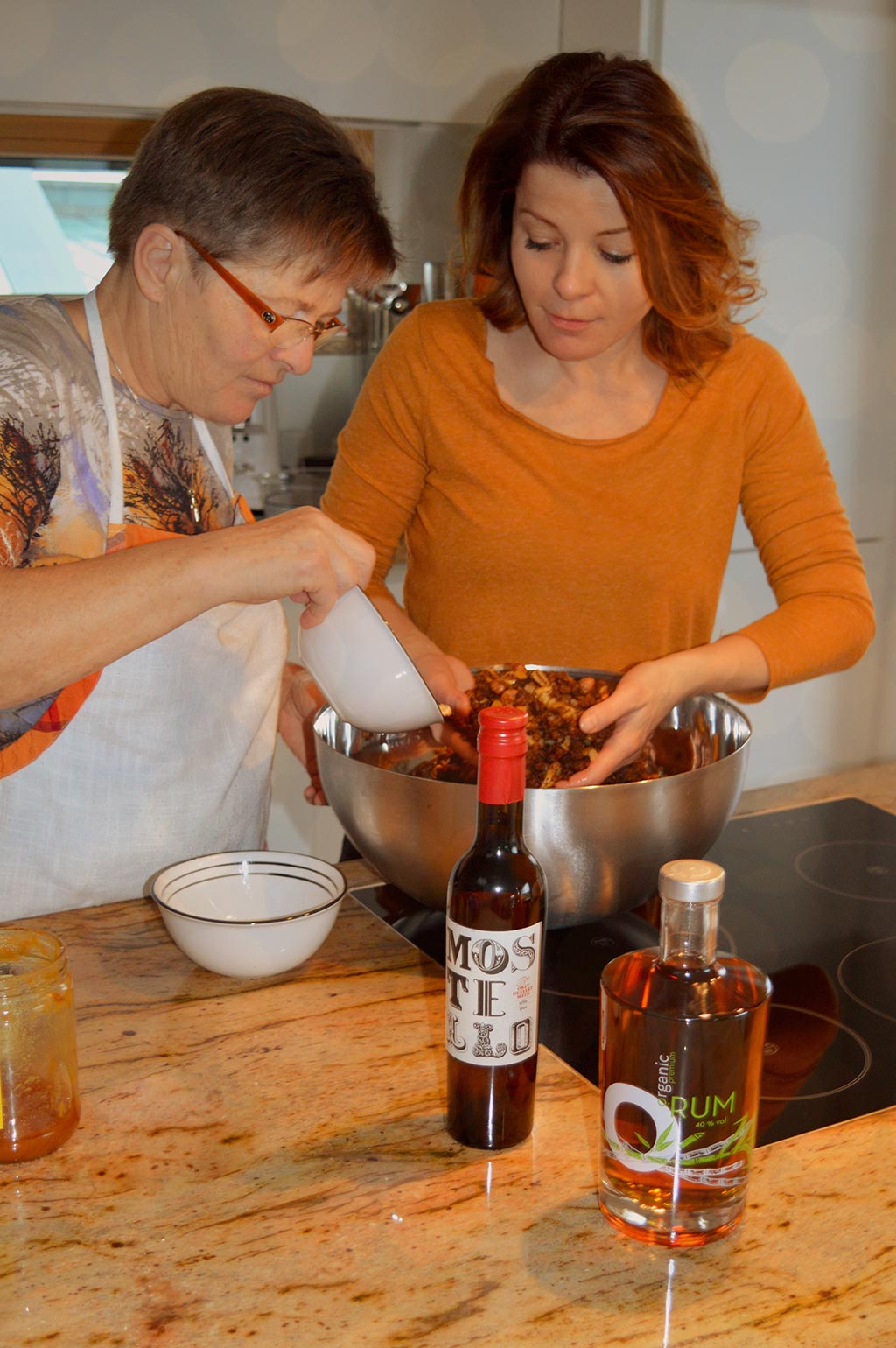
I'll admit that my mum didn't give up her Kletzenbrot recipe straight away. She has been baking it every year for over three decades, always starting four weeks before Christmas so it has time to become beautifully tender. While some regions make fruit bread without a dough wrapping, what makes Mostviertel Kletzenbrot so distinctive is its outer casing of rye and wheat bread dough.
Kletzenbrot recipe by Mama Gertraud Hausberger
Fruit filling:
2.1 kg Kletzen
0.5 kg figs
0.5 kg raisins
0.5 kg dried plums
0.5 kg walnut kernels
approx. 8 tbsp rum or liqueur (e.g. O•Rum or Zwetschkenlikör)
approx. 2 large (370 g) jars of plum jam
Leave the mixture to soak with 120 g sugar or 200 g honey for approximately ¾ of an hour.
Bread dough base:
1 kg rye flour
1 kg wheat flour
Mix salt, cinnamon, ground cloves, 3 tbsp gingerbread spice and 4 packets of cream of tartar baking powder into the flours by hand. Knead with warm water to form a dough – it should not be too dry.
With wet hands, shape small loaves, then wrap each one in the rolled-out bread dough. Place on a baking tray lined with baking paper and bake at 180°C fan for approximately 45 minutes. This quantity makes around 30 small loaves.
We wish you every success with your baking and a truly enjoyable Christmas season!
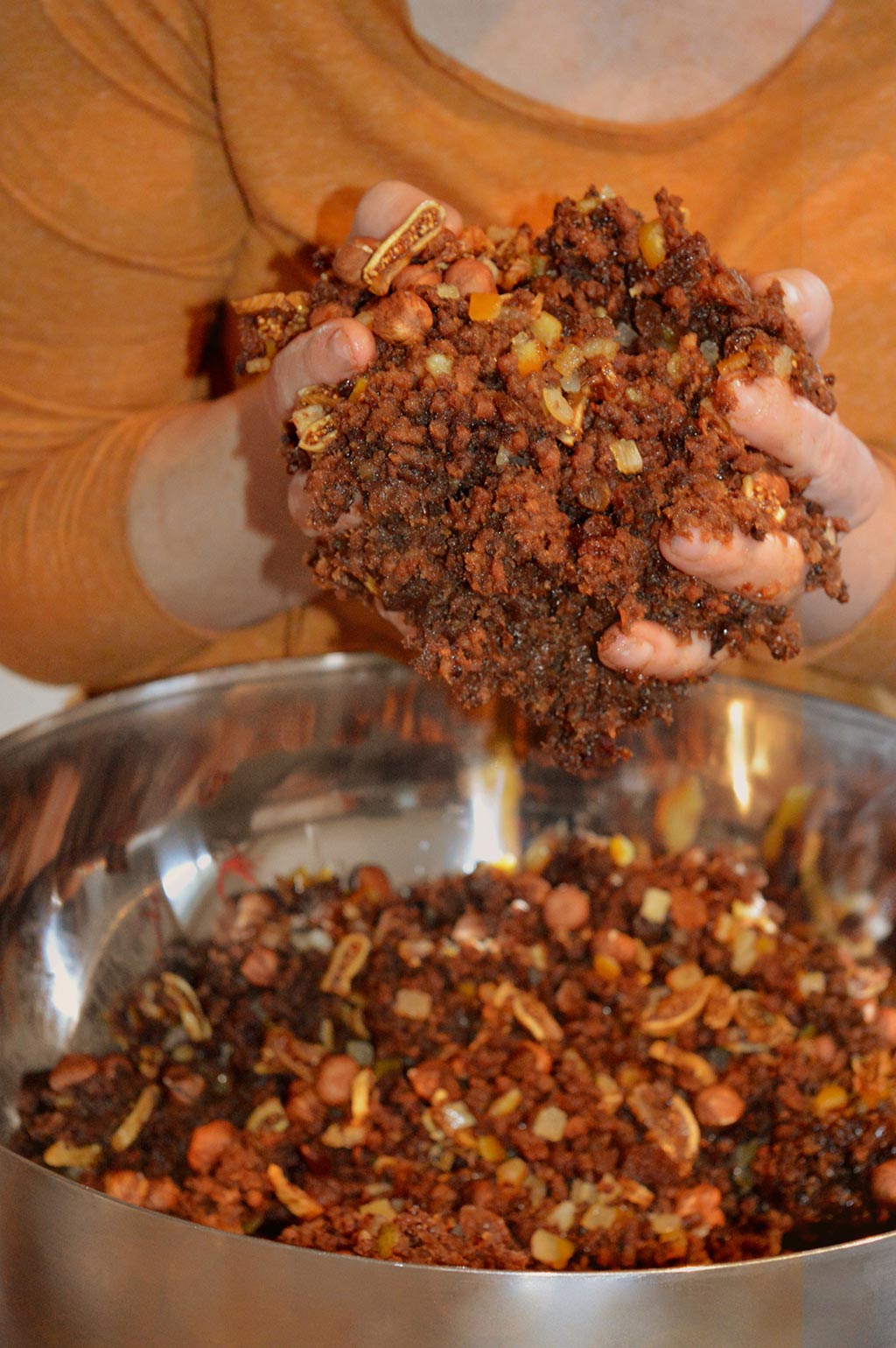
Kletzenbrot is no modern invention – it has been a beloved tradition for decades, particularly across Austria, Bavaria and Swabia. Even the Celts were mixing fruit into their bread. One very practical reason for making Kletzen- or fruit bread was, of course, preservation. Kletzenbrot keeps for a very long time. Depending on how prosperous a family was, more or less costly ingredients were added in days gone by.


