:quality(75))
A glass of Mostello … with Jürgen Schmücking
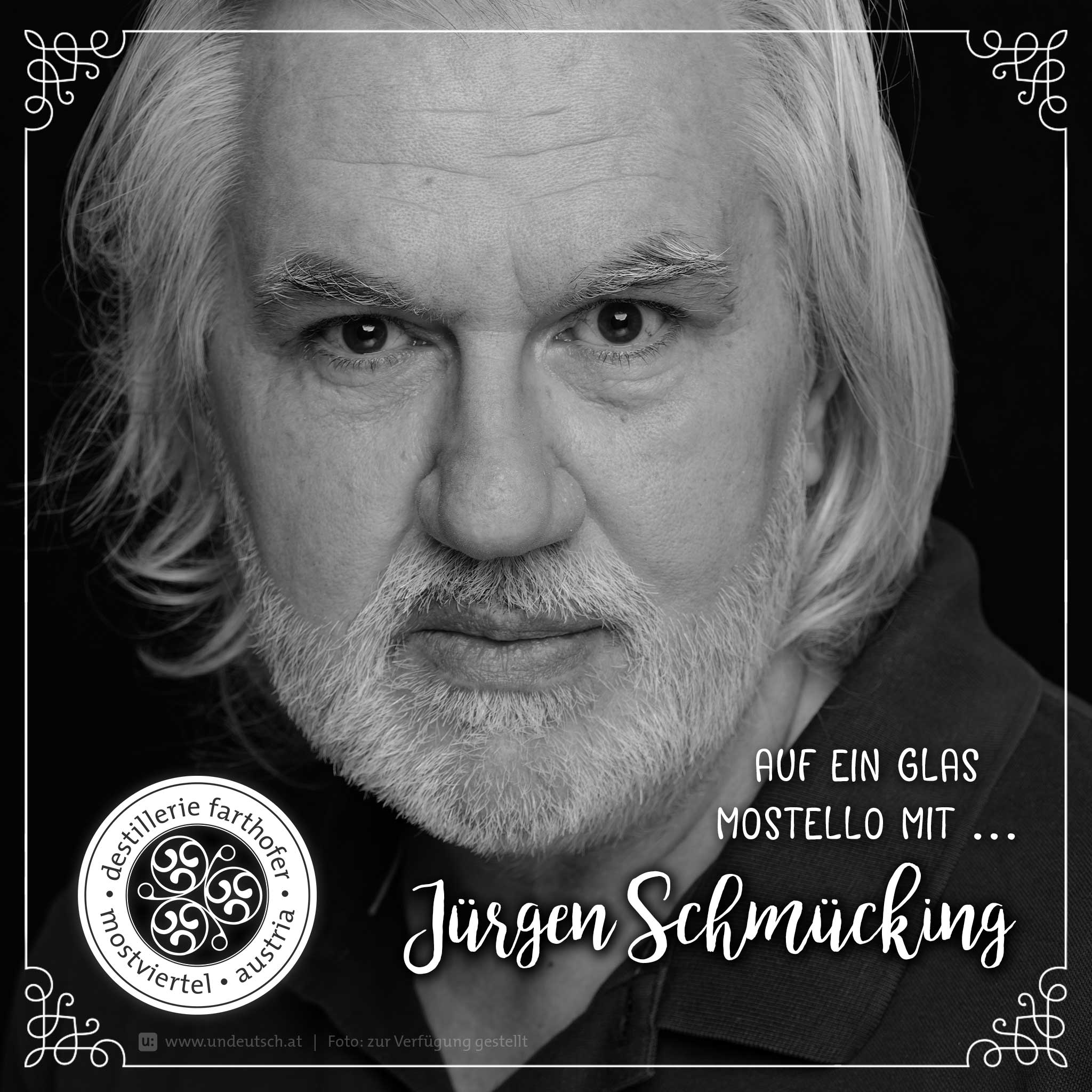
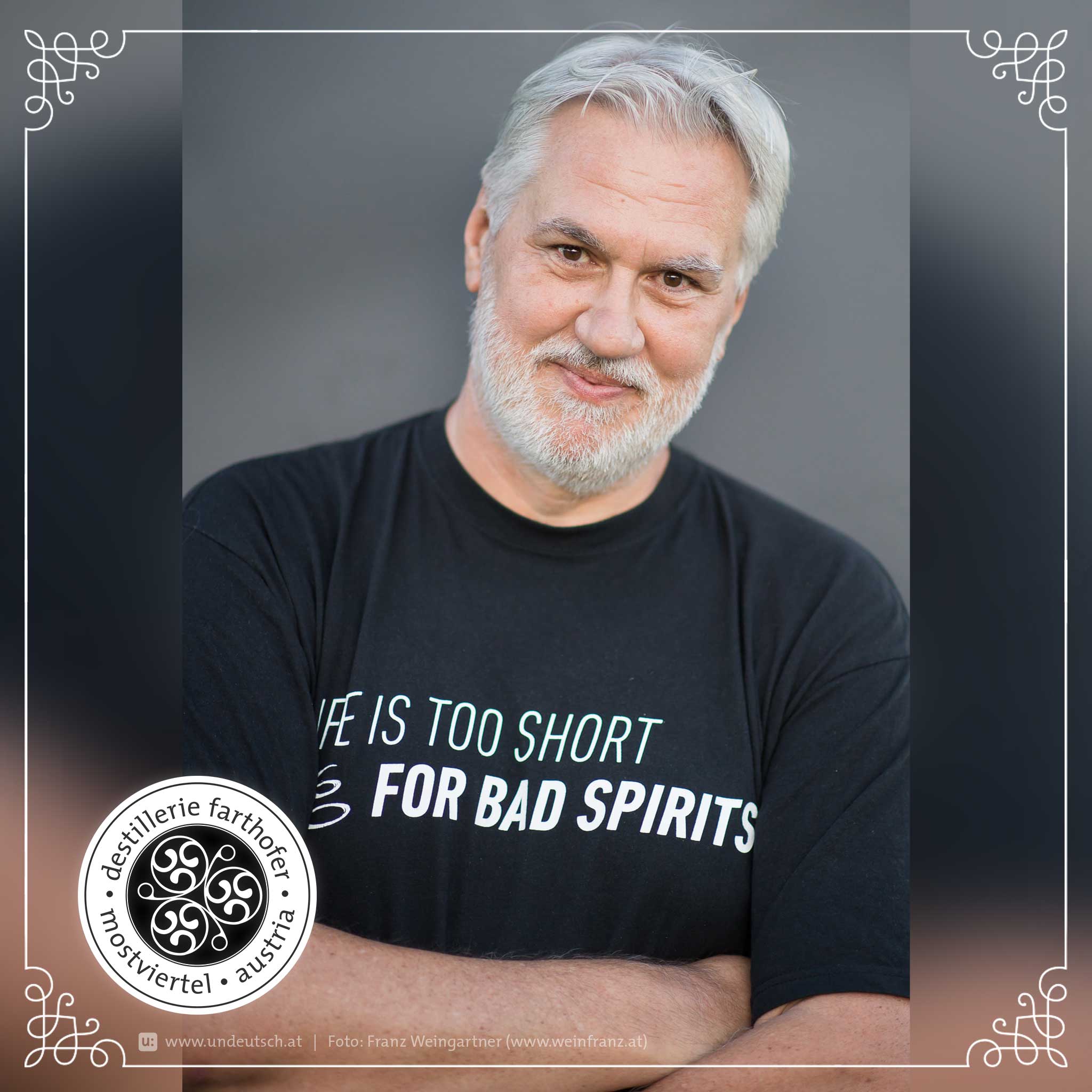
For this edition of our series "A Glass with …" we are delighted to sit down for an interview with Jürgen Schmücking. He is a journalist and photographer. His subjects are wine, spirits, beer, as well as cheese, fish and meat – and he is fascinated by where and how these foods are made, what they taste like, and the routes by which they reach consumers' palates. And, of course, the history and stories of the people who make them.
Farthofer: Dear Jürgen, when you look at a bottle of Mostello, what memory comes to mind?
Schmücking: The day I met Josef. It was at the Schnapsverkostertage in Walzenhausen, Switzerland. A gathering of big names from the world of spirits. Josef was there too. Over dinner he told me about his idea: to stop a pear cider from fermenting further by adding a distillate. The idea itself wasn't new. And given how unfashionable sherry, port and the like were back then, I truly couldn't imagine that idea having any future. I have never been so wrong.
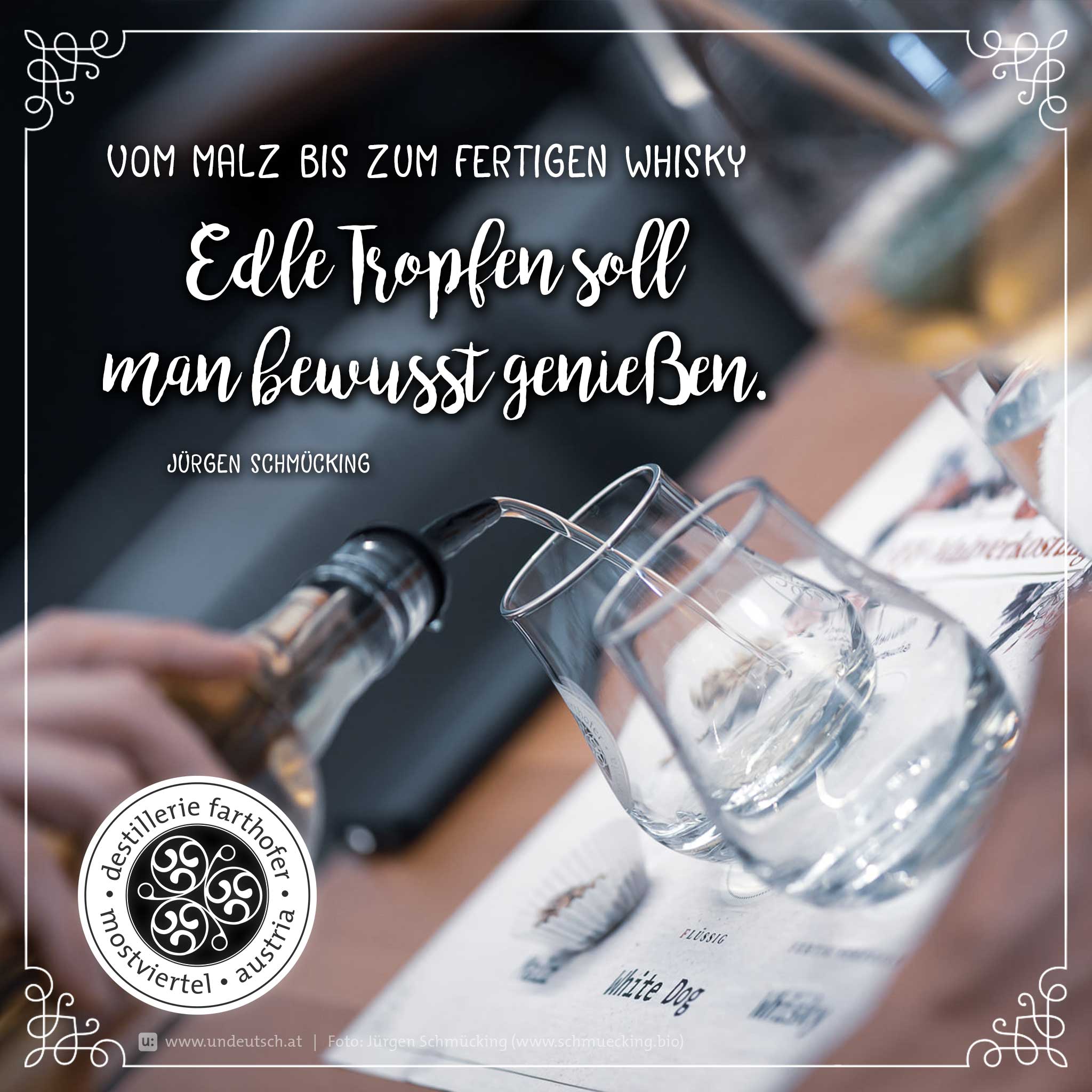
Farthofer: You have been accompanying our journey for many years as a source of ideas, a critical voice, a photographer and a journalist. What does the spirits scene do better than the rest of the drinks industry?
Schmücking: On one hand, it is rooted in craftsmanship and lives with – and partly from – tradition. On the other, it is more creative than the advertising industry. Advertisers don't like to hear that, but it's true. Both in product development and in the messages it puts out.
Farthofer: Whisky or vodka?
Schmücking: Slainthe ;-)
Farthofer: For over 20 years you have championed Bio as a journalist. Are you satisfied with the way things have developed among producers and consumers?
Schmücking: Well. The development itself is positive. At least when you look at the market shares. But there's still a lot to be done.
Farthofer: What still needs to happen on the organic front?
Schmücking: In reality, consumers still have little understanding of what organic actually means. You can see this when you follow the debates around the topic of "regionality". The organic associations have done good work in clearly defining and protecting the terminology. What hasn't happened – and it's worth noting that this isn't exactly easy – is that the imagery, the visual language, was never protected. Legally, that wouldn't have been possible anyway. But the connection should have been made much earlier and much more strongly. Today, conventional products and raw materials are marketed with idyllic, picture-perfect imagery, and consumers perceive it as: organic. We see posters of cows gazing into the sunset. With horns, but without ear tags. It strays so far from reality that it almost hurts. But it works. On the product side – meaning the actual offering – there isn't much left to do. Organic products have long since arrived in the top segment. Now it's about giving consumers a clear picture of what they're actually getting.
Farthofer: Photography has been your great passion for many years. How has your style changed over the last few years?
Schmücking: Impact matters more than technical perfection. In the past, when I was editing, I would discard any image that wasn't technically perfect. If the sharpness wasn't exactly where I originally wanted it, the photo was out. Now I look at the impact first. If an image touches you emotionally, I'm not too concerned about whether it's also razor-sharp and brilliant. Sometimes I even play deliberately with blur or unconventional cropping. I never would have done that before.
Farthofer: You were born in Linz, you live in Schwaz in Tyrol, commute regularly to Vienna, and travel abroad frequently for work. What's the one thing you keep leaving behind?
Schmücking: My wedding ring, the car keys, my phone, the charger, my business cards, the laptop – and (most annoyingly of all) the book I'm currently reading.
Farthofer: In which do you express yourself more precisely – words or images?
Schmücking: Images. Because it's a language that doesn't need to be decoded first.
Farthofer: If a drink and a dish need to please your wife, your two boys, and yourself: what do you make – what do you cook?
Schmücking: Is that a joke? One is 8, the other 19. When it comes to drinks, there's no way to please all 4 of us at once. On the plate, the lowest common denominator is Kaiserschmarren. Or lasagne. The drinks menu, on the other hand, ranges from gin and tonic or a young, fresh, crisp white wine (for my better half), buttermilk (for the little one), Desperado (the beer with the tequila flavour for the older one), all the way to natural wine or whisky (for me).
Farthofer: Thank you so much for the conversation!
Matching Products
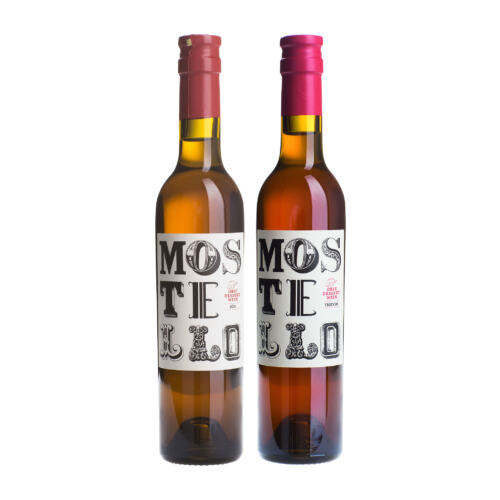
Mostello, Bio pear dessert wine
from 29,70 € incl. VAT
Base price: 79,20 € / 1000 ml
Delivery time: Austria 2 to 3 business days, Germany 3 to 4 business days
This product has multiple variants. The options can be selected on the product page Details
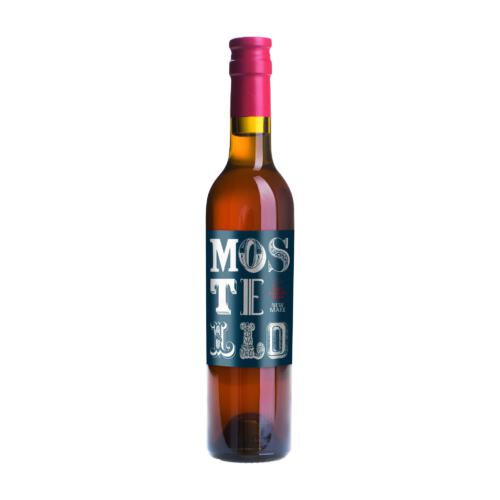
Mostello New Make, Bio pear dessert wine
29.90 € incl. VAT
Base price: 59.80 € / 1000 ml
Delivery time: Austria 2 to 3 business days, Germany 3 to 4 business days
This product has several variants. The options can be selected on the product page Details
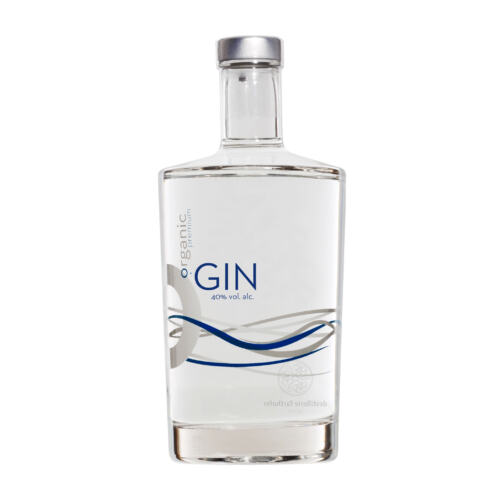
Organic Premium Gin, Bio Gin
from 6.90 € incl. VAT
Base price: 138.00 € / 1000 ml
Delivery time: Austria 2 to 3 working days, Germany 3 to 4 working days
This product has several variants. The options can be selected on the product page Details


