:quality(75))
The saying 'that's not quite kosher' is widely known. It's often used to describe a situation that feels a little off or seems somehow suspicious. But what does the term actually mean?
As kosher (literally 'fit' or 'suitable'), all foods are described that are compatible with the Jewish dietary law ('Kashrut')– foods that observant Jews are permitted to eat, while non-kosher foods ('treyf') are forbidden. Orthodox Jews in particular are meticulous about strictly following a kosher diet. It is well known, for example, that the meat of pigs, wild animals and horses is forbidden – in other words, 'treyf'. Dairy and meat products must also be kept strictly separate and must never come into contact with one another. Blood may not be consumed, and eggs must be carefully checked for traces of blood before they can be considered 'kosher'. The strict rules of Kashrut can mean that in Orthodox Jewish households, dishes, tea towels and even kitchen utensils are kept in multiple sets.
The consumption of alcohol is generally permitted for Jews. However, there are special requirements regarding the production of wine and all beverages made from fermented grapes. This is because wine holds ritual significance in other religions – such as Christianity – and therefore carries the risk of being used in the context of idolatrous worship. With pear-based products such as pear cider, the situation is quite different. In order for alcoholic products, such as our fruit brandies, to be considered kosher, the production process must also be in accordance with Kashrut.
Kosher Products by Farthofer
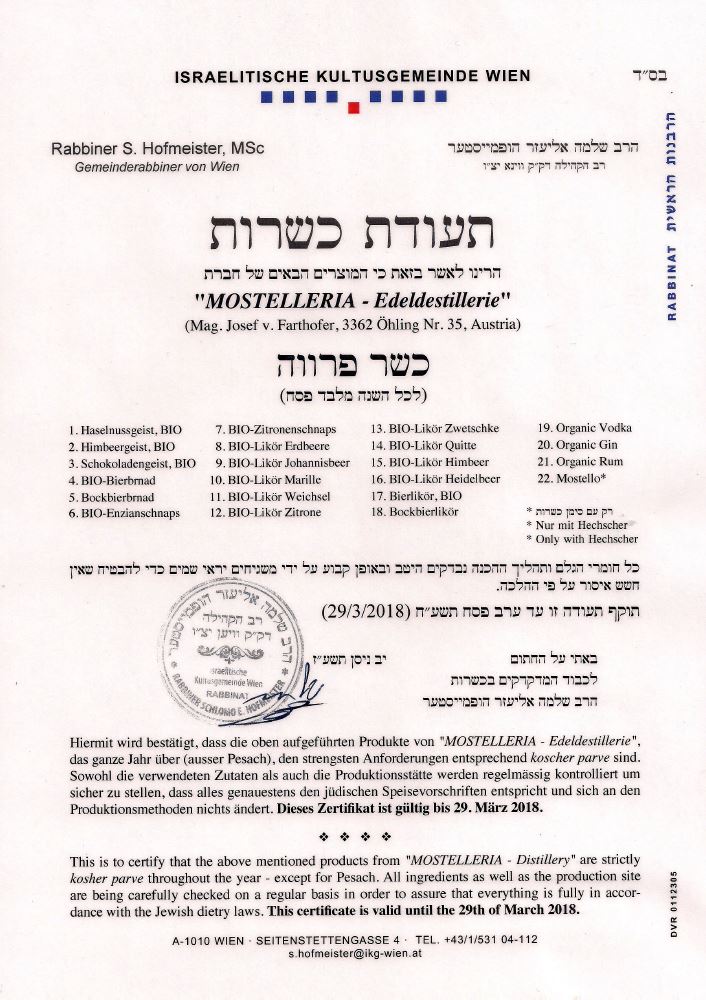
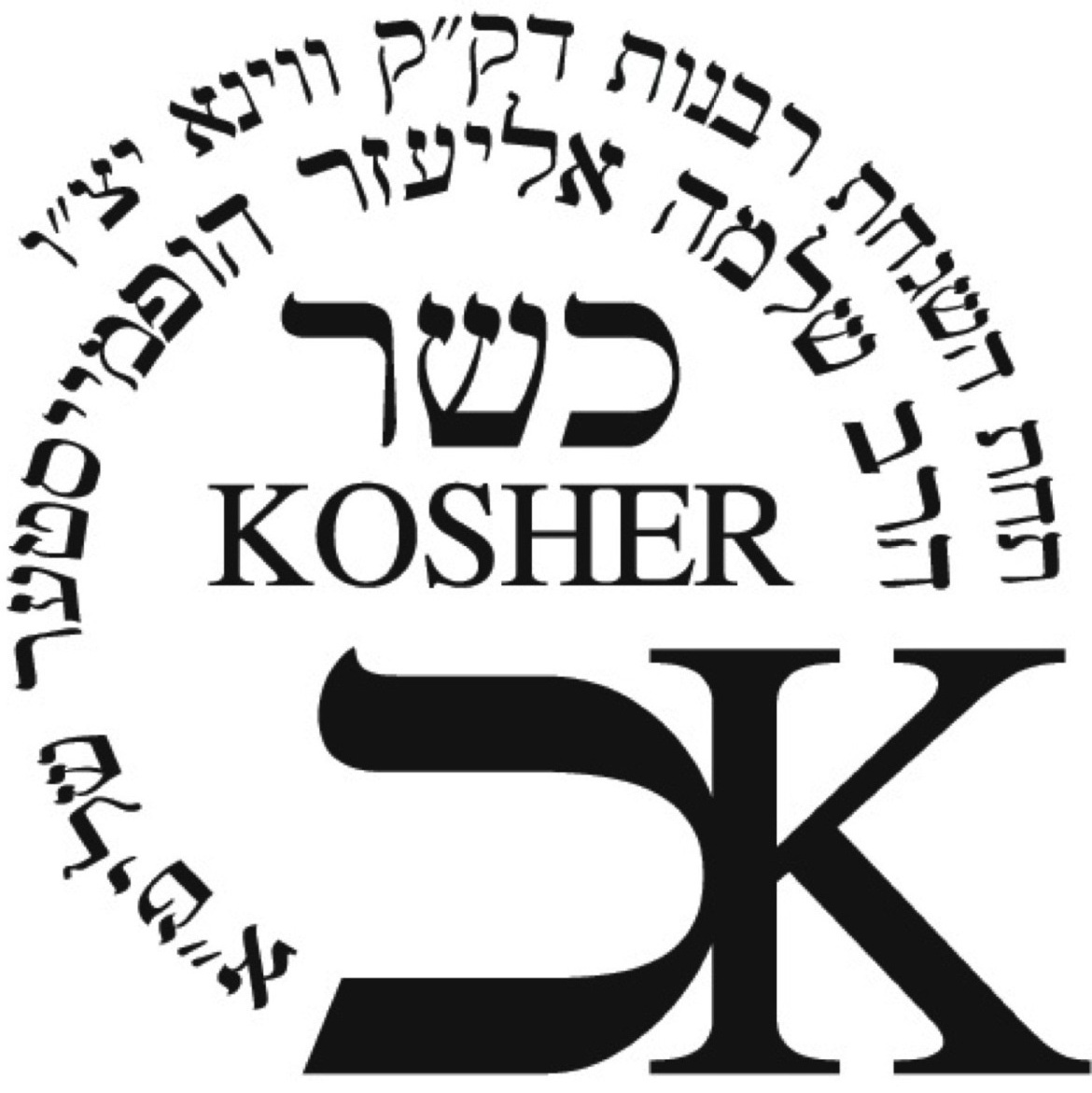
To allow Orthodox Jews to determine whether processed products are 'kosher', there is the kosher certificate, on which the relevant products are listed. In our Destillerie, we produce a total of 22 different liqueurs and fruit brandies to kosher standards. In order for these to be considered kosher, they must not conflict with the dietary laws of Judaism. Certain cultivated yeasts, for example, may not be used. Since we rely exclusively on vegan yeasts, however, this is not an issue for us. Fining agents such as gelatine are also, of course, not permitted. Our organic and exceptionally natural production methods, which yield particularly pure and high-quality products, work in our favour when it comes to certification. Rabbi Hofmeister was immediately enthusiastic about our products, as expanding the variety available to observant Jews is something close to his heart. Look carefully at our Mostello, gin, vodka or rum bottles and you'll spot the so-called 'hechsher' – the kosher seal.