:quality(75))
Curtain up for the stars of the Mostviertel – Meet our house pear varieties
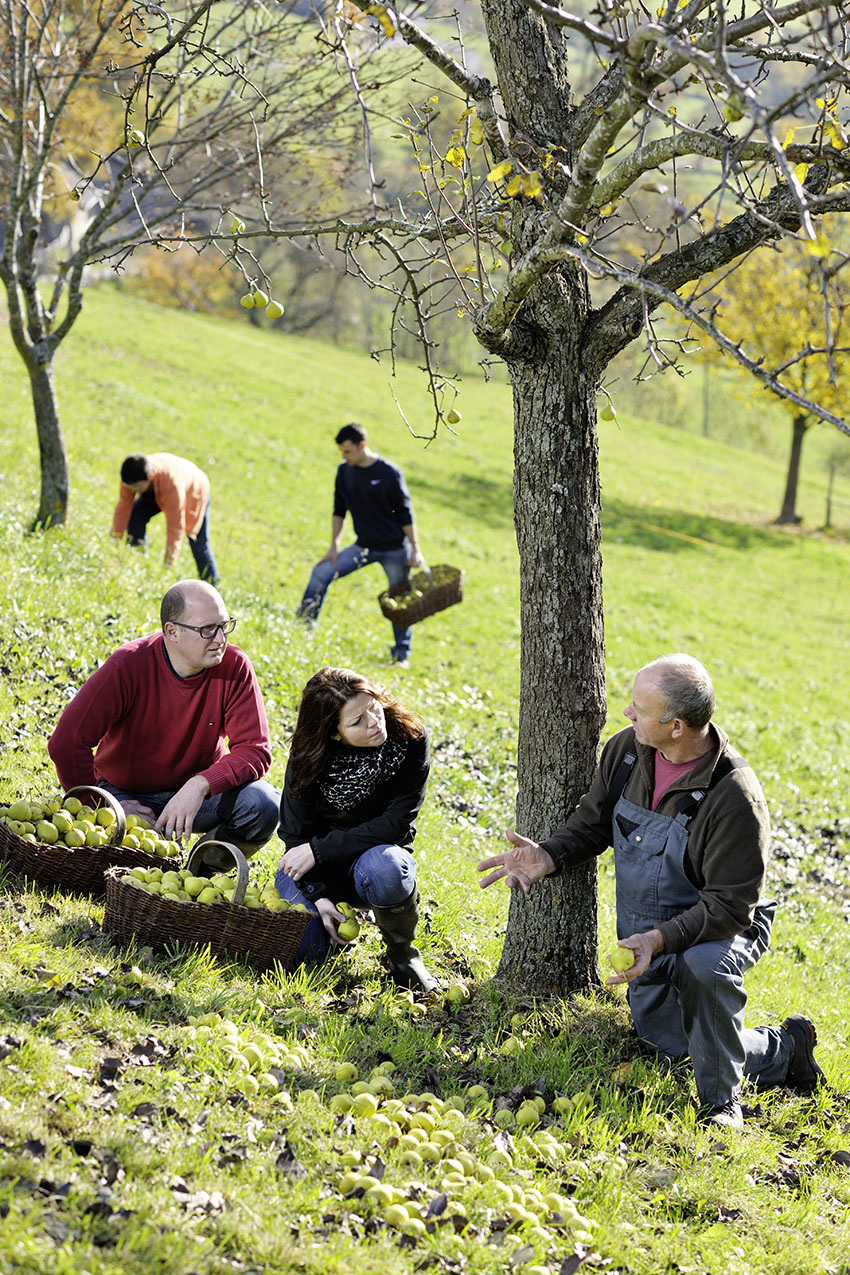
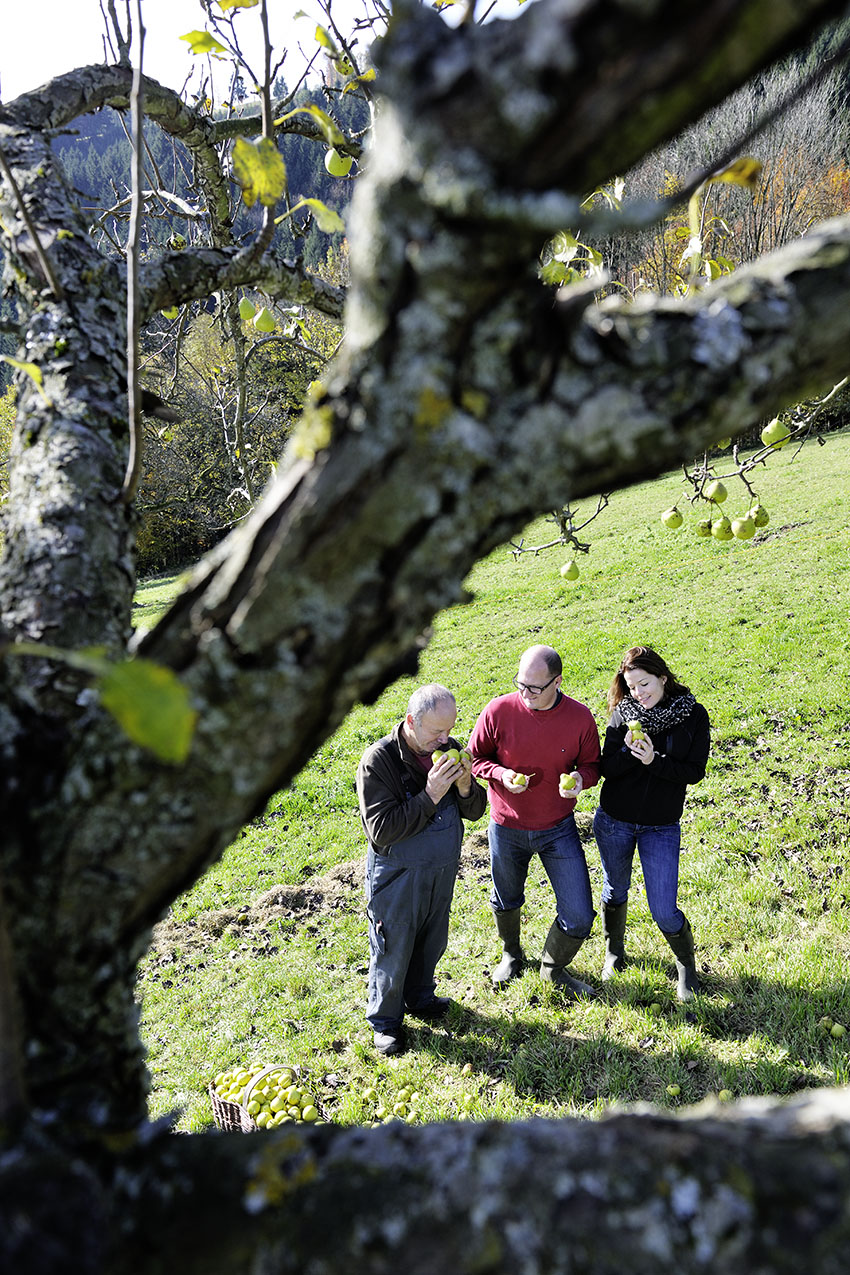
The Mostviertel is known as the largest contiguous perry pear tree region in Central Europe. This is where the perry pear is truly at home. Pomologists estimate that there are around 400 different perry pear varieties, with the majority of them found in theMostviertelSince many varieties are sadly no longer well known, the LEADER Region Moststraße has launched a project forvariety conservationPomologists Martina Schmidthaler and Gerlinde Handlechner identify all perry pears and cider apples brought in at the ten collection points. New varieties were already discovered after the very first sorting day. It will be exciting to see how many more are still out there. From the countless pear varieties of the Mostviertel, we have picked out our personal favourites. Our perry pear stars include theSchmotzbirne, theSpeckbirne, the Knollbirne, theGelbmostlerand theKongressbirne. In this blog post, we want to dedicate ourselves entirely to the Kongressbirne.
The aromatic Kongressbirne
It's not necessarily a looker. At 9 to 12 cm in length it's quite a large fruit, irregular in shape and sometimes almost chunky. The smooth, thin skin of the Kongressbirne has a gentle sheen, and the flesh is juicy, sweet and semi-melting.
The Kongressbirne didn't get its name by chance. A French fruit grower produced the first fruits of this then-new variety in 1863. In memory of the International Pomology Congress held in Paris in 1867, it was given the name 'Souvenir du Congrès' (meaning: a memento of the congress) – which was later simply shortened to 'Kongressbirne'. We source our Kongressbirnen from Randegg, 30 minutes south of Amstetten, in mountain farming zone 3. The sunny traditional orchard meadows on the south-facing slopes there provide exactly the right climate for the Kongressbirne. In the wrong location, this pear variety can taste mealy and turnip-like.
Thanks to its distinctive aroma – which comes closest to the well-knownWilliams pear– the Kongressbirne is very popular among schnapps connoisseurs. Unlike with the Williams pear, Josef does not remove the core from the Kongressbirne. He stirs the mash frequently to keep it particularly homogeneous. He begins distilling the Kongressbirne mash while fermentation is still winding down, so that the tannins don't dominate too strongly in the finished distillate. Around two years later, Josef brings the Bio Kongressbirne to a drinking strength of 40% alcohol using the exceptionally clear, pure drinking water from the spring on the family estate. Delicate and elegant on the nose, with a bold pear note on the palate and a finely spiced finish – that's how the finished pear distillate presents itself.
Speaking of congresses: we've actually hosted one ourselves. In 2015, the 1st International Traditional Orchard Fruit Congress took place in the Mostviertel, bringing together experts who explored the topic of traditional orchard fruit from a wide range of perspectives. Topics ranged from the right cultivation practices and managing disease, to marketing, cider architecture and product development – all within the context of traditional orchard fruit. In 2019, another Traditional Orchard Fruit Congress will be held in the Mostviertel. Perhaps one of the newly discovered perry pear varieties will even be named after this congress.