:quality(75))
We are right in the middle of growing our grain varieties, which form the foundation of our Bio products. For us, that means there's quite a lot happening on our fields in Biberbach right now. Through our organic approach we guarantee that our products remain 100% all-natural and can develop their full flavour. When it comes to growing grain, the key factors for us are above all the ideal preceding crop, the planting time, the right sowing depth and quantity, the perfect seed, and of course the weather.
The grain we are sowing right now will continue to grow until around December. The green plants then survive the winter beneath a blanket of snow. The following summer, the ripe kernels will be harvested. We rely entirely on ancient varieties such as Emmer, naked oats, naked barley, Schlägler rye, brewing barley or brewing wheat. These heritage varieties are very ancient grain types that are well adapted to local conditions and naturally resilient against pests and disease.
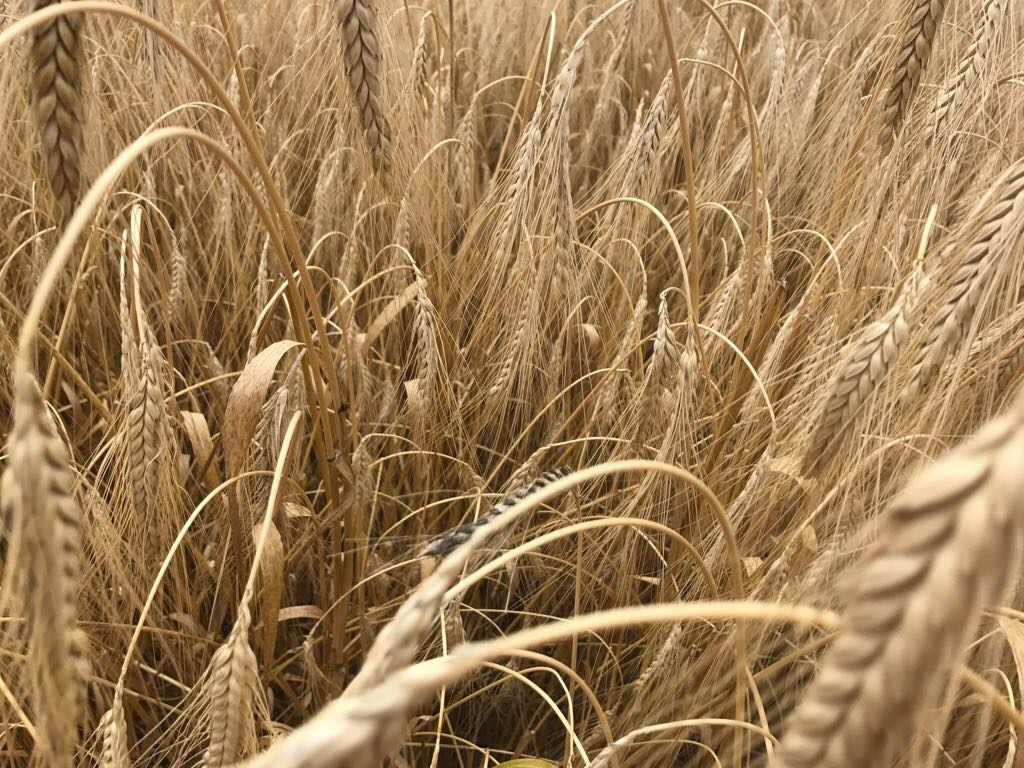
Emmer, for example, is also one of the healthiest foods around, thanks to its wealth of proteins and minerals. Perfect, then, for our Bio operation. Because they don't yield as much as conventional varieties, however, they are barely used in conventional farming.
For comparison: the expected yield for Emmer is between 1,000 and 3,000 kg per hectare. For common wheat it's around 8,000 kg per hectare. In total, we farm approximately 45 hectares.
In conventional farming, nutrients can be added to the soil through nitrogen fertilisation or the use of chemicals, correcting any deficiencies. In organic farming, we forgo the use of chemicals entirely. A proper crop rotation on our fields — one that keeps the bigger picture in mind — is therefore absolutely essential for us. This is necessary to ensure that nutrients are not drawn from the soil in a one-sided way, which would leave it depleted. We plan our crop rotation so that humus-builders alternate with humus-consumers. A year-round plant cover wherever possible is also extremely important for protecting the soil from erosion – that is, the loss of fertile topsoil. Through gentle soil cultivation with our shallow plough, which penetrates only about 12 to 15 cm into the ground, nutrients are kept closer to the surface and remain available to the plants. As fertiliser we use by-products from our distillation process, which have been prepared with effective micro-organisms, as well as cover crops and the straw from our grain, which is chopped and worked back into the soil. This is what we mean by a closed cycle.
Our whiskies and vodkas are born from the exceptional ancient grains we are currently growing.
▶ Embedded content: https://www.youtube.com/embed/_V_fQ4tH3VY?wmode=transparent&autoplay=0
▶ Embedded content: https://www.youtube.com/embed/Owg7_ZcaXuc?wmode=transparent&autoplay=0
▶ Embedded content: https://www.youtube.com/embed/D9kz2Xpp3DI?wmode=transparent&autoplay=0


